


HAIR TRANSPLANT UDAIPUR
What is a hair transplant?
A hair transplant is a procedure in which a Plastic surgeon moves hair to a bald area of the head. The surgeon usually moves hair from the back or side of the head to the front or top of the head.
Hair transplants should ideally occur in a hospital set up with all facilities and safety measures available for any surgery, as in Star Hospital, Udaipur, rather than in small clinics and rooms with no facility for emergencies
What happens during a hair transplant?
After thoroughly cleaning your scalp, a surgeon uses a small needle to numb an area of your head with local anaesthesia.
Two main techniques are used to obtain hair follicles for transplantation: FUE and FUT.
In Follicular Unit Uxtraction (FUE):
- The hair follicles are cut out directly from the back of the head through hundreds to thousands of tiny punch incisions.
- The surgeon makes tiny holes with a blade or needle in the area of your scalp that's receiving the hair transplant. They gently place hair in these holes
- During one treatment session, a surgeon may transplant hundreds or even thousands of hairs.
In Follicular Unit Transplantation (FUT):
- The surgeon will use a scalpel to cut out a strip of scalp skin from the back of the head. The incision is typically several inches long.
- This is then closed with stitches.
- The surgeon next separates the removed portion of scalp into small sections using a magnifying lens and a sharp surgical knife. When implanted, these sections will help achieve natural-looking hair growth.
A hair transplant session can take four to eight hours or more. Your stitches will be removed about 10 days after surgery in the case of FUT and no stitches are required in FUE. You may require subsequent sessions to achieve the full head of hair you desire. Sessions occur several months apart to allow each transplant to fully heal.
Steps of FUE Hair Transplant
Stage 1) Donor Area Preparation.
Stage 2) Anaesthesia (Donor Site): Local anaesthesia will be given to the donor site.
Stage 3) Donor Hair Extraction: The hair will be removed from the donor region.
Stage 4) Graft Preparation: The extracted hair will be isolated and arranged.
Stage 5) Anaesthesia (Recipient Site): Now local anaesthesia will be given to the recipient (bald) site.
Stage 6) Recipient Area Preparation: The recipient site will be set up for transplantation
Stage 7) Graft Insertion: The hair follicles will be grafted here.
Star Hospital, Udaipur aims at producing natural result to the patients for Hair Transplant in Udaipur and the procedure is performed by an expert Plastic Surgeon.
Why should you choose Star Hospital, Udaipur for your Hair Transplant in Rajasthan?
- We with our well experienced team assure you to offer best hair transplant
- Any case taken by us is properly planned and studied with the patient ,before the operation stage
- With safe and best hair transplant treatment in Udaipur we are providing natural result to our patients
- We also have the best OT set up for Hair Transplant surgery with all safety measures.
- Procedure is done by an expert Board certified Plastic & Cosmetic Surgeon
- NO PAIN - NO STITCH - NO SCARS VISIBLE - ONE DAY PROCEDURE
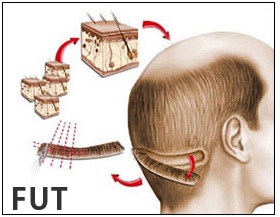
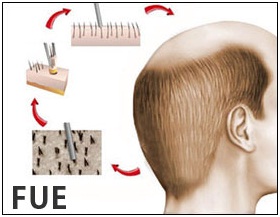
| Feature | Strip Hair Transplant (FUT) | FUE Hair Transplant |
| Stitch | Cutting open the skin and closing it with stitches So can have stitch related problems | No stitches Minimally invasive |
| Stretching of scar | Can prolong healing period and one has to avoid physical activity for weeks | No such problem and one can start physical activity soon after transplant |
| Recovery | 2-3 weeks usually need 1 month of rest for atheletes, body builders etc | 3-4 days. Exercise, weight training, sports, can be resumed in 4-5 days |
| Donor complications | Not uncommon e.g. wide scar, painful scar, delayed healing of stitches and give away of stitches | Practically nil, Minimal Scarring |
| Short hair style | Scar becomes visible, so sporting long hair style is mandatory | Can easily sport short hair style |
| Numbness above stitches | Numbness above the stitches often last for months or permanently due to division of nerves in the line of cut | No numbness because there is no division of nerves |
| Pain in the stitches | Pain for 10-30 days and sometimes even permanently due to entrapment of nerve in the area of cut | Practically no post operative pain |
| Tightness in the donor area | Common for few months | Nil |
| Blood loss in surgery | More | Minimal |
| Operation time | Less | More |
| Donor hair availability | 3000 and sometimes 3500 in one sitting Usually not more than 6000 in two or three sittings | Less Number in one sitting Could be more with body hair transplant |
| For grey hairs | Difficult to visualize and can have more transactions | Procedure and transaction rate remains unchanged with grey hairs |
| For limited or poor donor area | You cannot select good number of 3 and 4 hair grafts | Maximum number of 3 and 4 hair grafts can be selected to increase the number of transplanted hairs |
| For patients with tight scalp | Larger sessions and multiple sittings become difficult | Ideal method |
| Shock loss | More chances due to more invasive nature of procedure esp in the donor area | Rare, due to minimally invasive nature of the procedure |
| For those with more risk of scarring like Asians | More chances of stretched out scar and hypertrophic scar | Minimum such chances |
| Control on graft harvesting | It is possible that the strip may have less or more hairs than pre calculated | You can calculate and control the exact number of grafts extraction as you wish |
| Special advantages |
|
|
| Time for transplant | Up to 3000 grafts in 5 hours | Up to 3000 grafts in 10 hours |
| Surgeons time | Surgeon spends 20% of time Technicians spend 80% of time on the procedure | Surgeon spends 80% of time Technicians spend 20% of the time on the procedure |
Book an Appointment:
Reach out to us through phone, email, or our online enquiry form to schedule your consultation with our specialist surgeons.