- ISO 9001:2015 Certified Hospital
- starhospitaludaipur@gmail.com
- +919660713450
- +91 9928569121

Drug-Induced Gynecomastia: Medications That May Cause Male Breast Enlargement

Why More Women Are Choosing Vaginal Tightening Treatments Today
June 8, 2026
दवाओं से होने वाला गाइनेकोमेस्टिया: वे दवाएं जिनसे पुरुषों में ब्रेस्ट का आकार बढ़ सकता है
June 11, 2026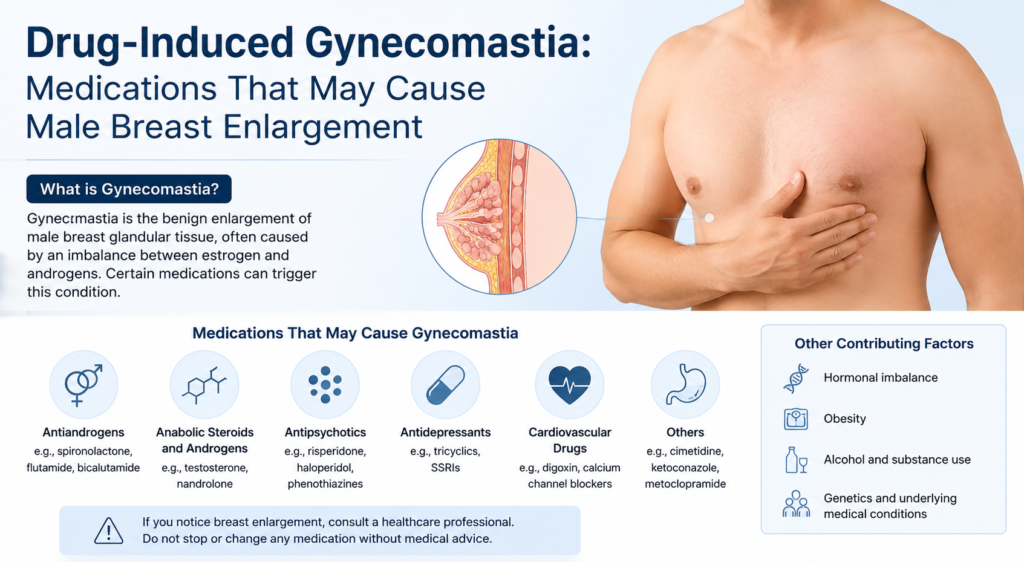
Drug-induced gynecomastia is a condition in which certain medications lead to the enlargement of breast tissue in males. It can affect one or both breasts and may cause tenderness, swelling, or emotional discomfort. While gynecomastia is often harmless, it can be concerning for many men because it changes the chest appearance and may signal an underlying hormonal imbalance. In many cases, the condition develops as a side effect of medicine use rather than from a disease itself. For individuals experiencing persistent or severe breast enlargement that does not improve with medical management, male breast reduction (gynecomastia) surgery in udaipur may be considered as an effective treatment option to restore a flatter, more masculine chest appearance.
Understanding which medications can trigger gynecomastia is important because early recognition may help prevent the problem from worsening. Some medicines affect hormone levels, while others interfere with the body’s ability to produce, block, or metabolize hormones. In a few cases, stopping or changing the medication under medical guidance may improve the condition.

What Is Drug-Induced Gynecomastia?
Gynecomastia refers to the growth of glandular breast tissue in males. It is different from simple fat accumulation in the chest area. Drug-induced gynecomastia occurs when a medicine disrupts the balance between testosterone and estrogen in the body. When estrogen activity becomes relatively higher, breast tissue may begin to enlarge.
This condition can appear gradually or more suddenly depending on the medication, dosage, and how long the medicine has been used. It may occur in one breast or both, and sometimes the tissue becomes sensitive or painful to touch. In many cases, the enlargement is mild, but in others it may become noticeable and persistent.
How Medications Cause Breast Enlargement
Medicines can cause gynecomastia in several ways. Some lower testosterone production, while others increase estrogen levels or mimic estrogen-like activity. Some drugs also block androgen receptors, preventing testosterone from working properly. In addition, certain medications can affect the liver, kidneys, or hormone-producing glands, which indirectly changes the hormone balance.
The effect is not always the same for every person. One man may take a medicine for months without any symptoms, while another may develop breast enlargement after only a short time. Age, overall health, body weight, and the use of multiple medications can all influence the risk.
Common Medications That May Cause Gynecomastia
Several categories of medicines have been linked to male breast enlargement. Some of the most common include:
- Hormone-related medications such as anti-androgens and treatments for prostate conditions
- Certain heart medications, including some blood pressure drugs
- Some ulcer medicines and stomach acid reducers
- Specific psychiatric medications
- Drugs used for infections or chronic illness
- Some anabolic steroids or performance-enhancing substances
- Certain drugs used for hair loss or skin conditions
Each of these works differently in the body, but they can all disturb the normal balance of male hormones.
Medicines for Prostate Conditions
One of the most well-known causes of drug-induced gynecomastia is medication used to treat prostate problems, especially prostate cancer. Anti-androgen drugs can block testosterone action, which may lead to breast tissue growth. Some hormone therapies used to control prostate disease also change the balance between testosterone and estrogen.
These medicines are often necessary for serious medical conditions, so they should never be stopped on your own. A doctor may adjust the dose or consider another treatment if gynecomastia becomes troublesome.
Heart and Blood Pressure Medications
Some medications used for heart disease and high blood pressure have been associated with male breast enlargement. A few examples include certain calcium channel blockers, ACE inhibitors, and older diuretics. Not every person using these drugs will develop gynecomastia, but the risk is present in some cases.
The exact reason varies depending on the medicine. Some may interfere with hormone metabolism, while others may affect how the body responds to hormones. If breast enlargement begins after starting a new heart medication, the doctor should be informed.
Stomach and Digestive Medications
Several medicines used for stomach ulcers, acid reflux, and digestive problems have also been linked to gynecomastia. Some acid-reducing drugs may alter hormone levels or affect liver metabolism in a way that changes estrogen and testosterone balance.
This is not a common side effect for everyone, but it is worth considering when gynecomastia appears without another obvious cause. People often use these medications for long periods, so the connection may be missed unless medication history is carefully reviewed.

Psychiatric and Neurological Medications
Certain medicines used for mental health conditions may contribute to gynecomastia. Some antipsychotic medications can raise prolactin levels, and high prolactin may affect testosterone balance. A few antidepressants and anti-anxiety drugs have also been reported in association with breast enlargement, although the risk differs by medication.
These medicines are important for managing mental health, so any side effects should be discussed with a healthcare professional rather than stopping treatment suddenly.
Antibiotics, Antifungal Drugs, and Other Prescription Medicines
A smaller number of infections-related medications have been linked to gynecomastia. Some antifungal drugs, antibiotics, and medicines used for chronic viral conditions may influence hormones or liver function. In rare cases, long-term use of certain prescription medicines can trigger breast tissue growth.
Because many people take these drugs for short periods, the risk is usually lower than with hormone-related treatments. Still, any unexplained chest swelling after starting a new medicine should be evaluated.
Anabolic Steroids and Performance-Enhancing Drugs
One major cause of gynecomastia in younger men is the use of anabolic steroids or similar performance-enhancing substances. These substances can create a major hormone imbalance. When the body senses too much external testosterone-like activity, it may convert some of it into estrogen, which can stimulate breast tissue growth.
This type of gynecomastia can be more difficult to reverse if the tissue has been present for a long time. It is one of the clearest examples of how outside hormone use can affect the body’s natural endocrine system.
Signs and Symptoms to Watch For
Drug-induced gynecomastia may cause more than visible breast enlargement. Some common signs include:
- Swelling beneath one or both nipples
- Tenderness or mild pain in the chest area
- A firm or rubbery tissue lump under the nipple
- Sensitivity when the area is pressed
- Uneven breast size
In some cases, the enlargement is subtle at first and only becomes noticeable over time. Because the condition can look similar to chest fat or other medical issues, a proper medical evaluation is important.
When to See a Doctor
A doctor should be consulted if breast enlargement appears after starting a new medication, if the tissue becomes painful, or if the swelling continues to grow. Medical advice is also important if the enlargement is only on one side, feels very hard, or is associated with nipple discharge or other unusual symptoms.
A healthcare provider may review the medication list, check hormone levels, and perform a physical examination to determine the cause. Sometimes imaging or blood tests are needed to rule out other conditions.
Treatment and Management
Treatment depends on the cause and how long the gynecomastia has been present. In some cases, the doctor may recommend stopping the responsible medication or switching to another option. This must always be done under medical supervision, especially when the medicine is treating a serious condition.
Other management options may include:
- Observation if the condition is mild and likely to improve
- Medication adjustment under a doctor’s guidance
- Treatment of the underlying hormone imbalance
- Surgery in severe or long-lasting cases
Early action often improves the chances of reversal. Once breast tissue has been present for a long time, it may become less responsive to treatment.

Conclusion
Drug-induced gynecomastia is a real and often overlooked side effect of several medications. Hormone therapies, certain heart medicines, stomach treatments, psychiatric drugs, and anabolic steroids are among the more common causes. Although the condition is usually not dangerous, it can affect confidence and quality of life.
The most important step is recognizing the possible link between medication use and breast enlargement. With prompt medical evaluation, the cause can often be identified and managed. Never stop a prescribed medicine on your own, but do speak with a doctor if you notice changes in the chest area after beginning a new treatment. If gynecomastia persists despite medical management and affects your confidence or quality of life, consulting the best cosmetic surgeon in udaipur can help you explore appropriate treatment options, including advanced surgical correction for long-lasting results.
This blog is for a basic guide and general information only and a qualified doctor may be consulted for details and proper guidance regarding the drugs and medicines mentioned in this blog.