- ISO 9001:2015 Certified Hospital
- starhospitaludaipur@gmail.com
- +919660713450
- +91 9928569121

Facial Injuries and Fractures: Causes, Symptoms and Care

गर्भाशय ग्रीवा क्रायो कॉटरी: (सर्विक्स क्रायो कॉटरी) प्रक्रिया, लाभ और ठीक होने की अवधि
October 8, 2026
चेहरे की चोटें और फ्रैक्चर: कारण, लक्षण और देखभाल
October 13, 2026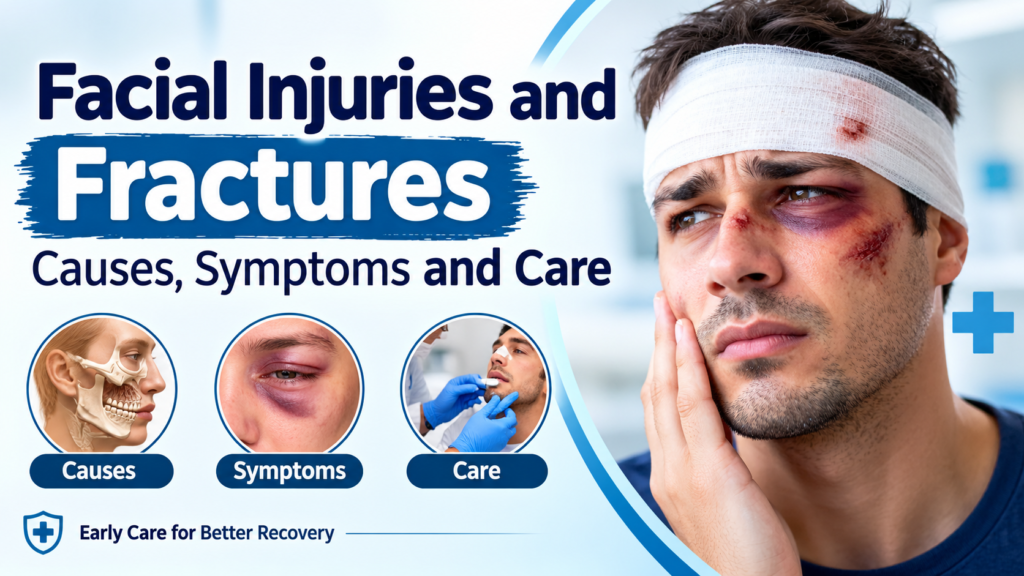
Facial Injuries and Fractures can occur suddenly during road accidents, sports, falls, workplace incidents, or physical altercations.They may affect the skin, teeth, nose, cheekbones, jaw, or the delicate bones surrounding the eyes. Some injuries cause only bruising and swelling, while others involve fractures that need urgent medical assessment. Recognising warning signs early is important because damage inside the face may be more serious than it appears from the outside. Timely care can protect breathing, vision, chewing, and long-term facial function. At Star Hospital Udaipur, timely professional assessment can help determine the type of injury and the care it may require. For injuries that affect facial appearance or function, patients seeking plastic surgery in Udaipur can explore suitable specialist assessment and reconstructive treatment options based on their medical needs.
Treatment depends on the location and severity of the damage, and may range from wound care and monitoring to specialist procedures or surgery. This guide explains causes, warning signs, diagnosis, first aid, and recovery considerations. If an injury affects breathing or vision, causes uncontrolled bleeding, or follows a serious head impact, seek emergency care rather than waiting for symptoms to improve.
What Are Facial Injuries and Fractures?
Facial injuries and fractures involve damage to the soft tissues or bones of the face. Soft-tissue injuries include cuts, bruises, and swelling, whereas fractures occur when one or more facial bones break. These injuries may affect appearance and interfere with everyday activities, including speaking, eating, breathing, and seeing clearly.
The facial skeleton includes the nasal bones, cheekbones, upper jaw, lower jaw, and bones surrounding the eyes. An injury may involve one area or several structures simultaneously. The seriousness depends on the force of the impact, the location of the injury, and whether nearby structures have also been damaged.
Some injuries are immediately visible, while others may not become obvious until swelling develops. Therefore, an apparently minor injury should not automatically be considered harmless, especially after a significant accident.
Facial Injuries and Fractures: Symptoms and Diagnosis
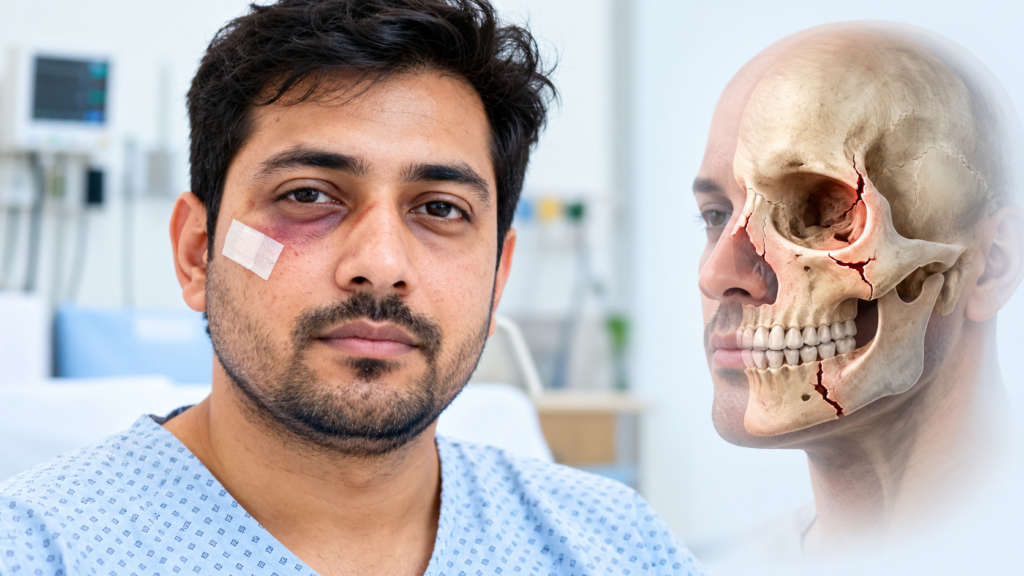
The signs of an injury vary according to the part of the face affected. Facial fracture symptoms may include pain, tenderness, swelling, bruising, numbness, or a change in the usual shape of the face. Difficulty opening the mouth, loose teeth, and changes in the way the upper and lower teeth meet can also indicate a possible fracture.
Other warning signs include:
- Nose injuries: Nosebleeds, swelling, tenderness, or difficulty breathing through the nose.
- Jaw injuries: Pain while chewing, limited mouth movement, or an altered bite.
- Cheekbone injuries: Swelling, facial numbness, or tenderness around the cheek.
- Eye socket injuries: Blurred or double vision, eye pain, or difficulty moving the eyes.
- Soft-tissue injuries: Cuts, grazes, bruising, or bleeding around the face.
Recognising facial injuries and fractures requires attention to both visible damage and changes in normal function. For instance, double vision or difficulty moving an eye following facial trauma should be assessed urgently. Clear fluid draining from the nose after a significant head injury can also indicate a serious problem and requires emergency evaluation.
What Causes Facial Injuries?
Several situations can cause damage to facial tissues and bones. Road traffic accidents, falls, sports collisions, workplace incidents, and physical assaults are common causes. Direct impacts during recreational activities can also injure the nose, jaw, cheekbones, or areas around the eyes.
The risk of complications increases when an injury involves multiple bones or occurs alongside a head, neck, or eye injury. Wearing seat belts, using appropriate protective equipment, and following sports safety guidelines can help reduce the likelihood of some injuries.
How Are Facial Injuries Diagnosed?
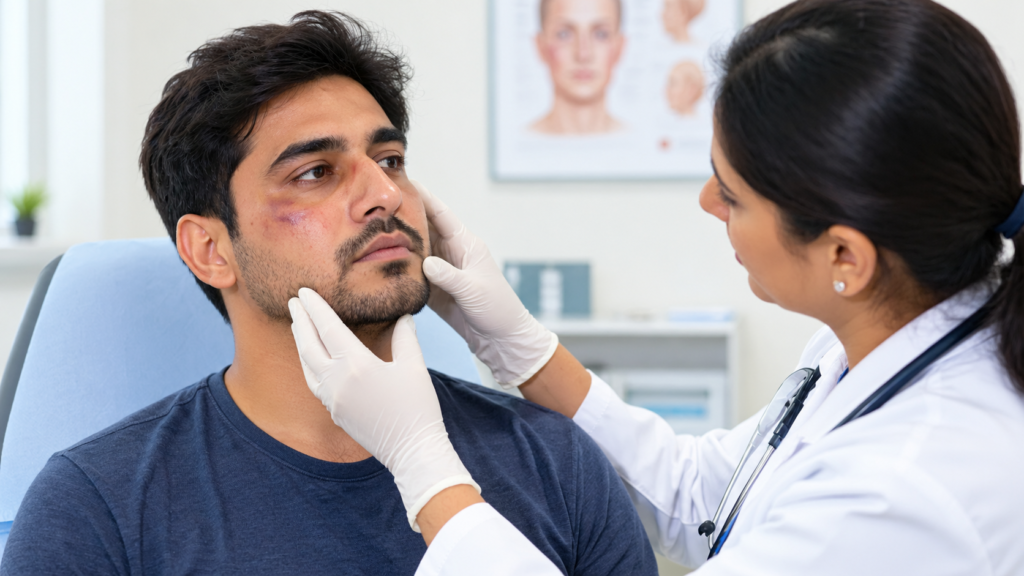
A healthcare professional generally begins by assessing the person’s breathing, bleeding, and overall condition. The examination may include checking facial symmetry, eye movement, sensation, mouth opening, and the alignment of the teeth.
Depending on the findings, imaging may be needed to determine whether a bone is broken. Computed tomography (CT) scans are commonly used when a detailed assessment of facial fractures is necessary. Dental or specialist examinations may also be recommended for injuries involving the jaw, teeth, or eye socket.
It is important to tell the clinician about any facial fracture symptoms, including numbness, changes in vision, difficulty chewing, or breathing problems. This information helps guide further examination and appropriate care.
Facial Injury Treatment: Available Options
The right facial injury treatment depends on the affected area, the severity of the damage, and whether other structures have been injured. Minor bruises and superficial cuts may require basic wound care and observation, while complex fractures may need specialist treatment or surgery.
Common treatment approaches include:
Wound care: Cuts may need careful cleaning and closure with appropriate medical methods to support healing and reduce scarring.
Pain and swelling management: A clinician may recommend suitable pain relief and measures to reduce swelling, depending on the injury.
Fracture management: Some fractures can heal without surgery if the bones remain properly aligned and normal function is preserved. Others require reduction, which means repositioning the broken bones.
Surgical stabilisation: More complex fractures may require fixation using plates, screws, or other appropriate techniques to keep the bones in position while healing takes place.
The treatment plan should be based on clinical examination rather than appearance alone. Because facial injuries and fractures can affect breathing, vision, chewing, and facial alignment, timely assessment is essential to determine whether specialist intervention is required.
What to Do Immediately After a Facial Injury
Taking appropriate steps immediately after an injury may help prevent additional damage while medical assistance is arranged.
- Seek emergency help for breathing difficulties, uncontrolled bleeding, severe eye symptoms, or suspected serious head injury.
- Apply a cold pack wrapped in a clean cloth gently to an injured area when appropriate. Do not place ice directly on the skin.
- For a nosebleed, sit upright and lean forward. Avoid forcing the nose into position.
- Do not attempt to realign a suspected broken bone or push an injured eye area.
- Avoid unnecessary movement if a neck or head injury is suspected.
For suspected facial injuries and fractures, prompt professional assessment is preferable to relying on home remedies. Severe pain, changes in vision, loose teeth, an altered bite, or persistent bleeding warrant urgent medical attention.
Recovery and Prevention
Recovery time varies according to the injury, the treatment required, and the individual’s general health. Minor soft-tissue injuries may improve relatively quickly, while fractures can take several weeks or longer to heal. Complex injuries may require follow-up appointments and rehabilitation.
Follow the clinician’s facial injury treatment plan carefully, attend recommended follow-up visits, and maintain good oral hygiene when the mouth or jaw is affected. Avoid contact sports and activities that could cause another impact until a healthcare professional confirms that it is safe to return.
To reduce future risks, wear seat belts, use suitable helmets and protective equipment, and follow workplace and sports safety instructions. Protective habits cannot prevent every injury, but they can reduce the likelihood of serious trauma.
Conclusion
Facial injuries and fractures range from minor soft-tissue damage to complex bone injuries that require urgent medical attention and are best treated by an experienced Plastic surgoen. Recognising warning signs, obtaining an accurate diagnosis, and following an appropriate treatment plan can help preserve facial function and support recovery.
Never ignore breathing difficulties, vision changes, uncontrolled bleeding, or suspected head injuries after facial trauma. Early medical evaluation can help identify hidden damage and determine the right next steps. For local medical guidance, readers may contact Star Hospital Udaipur to ask about appropriate assessment options and referrals.
FAQs About Facial Injuries and Fractures
1. What are the common symptoms of facial injuries and fractures?
Common symptoms include facial pain, swelling, bruising, bleeding, numbness, difficulty opening the jaw, or misaligned teeth. Blurred or double vision may also indicate a serious injury.
2. When should I see a doctor after a facial injury?
Seek immediate medical attention if you experience difficulty breathing, severe bleeding, changes in vision, intense pain, or a suspected serious head injury.
3. How are facial fractures diagnosed?
A doctor examines the face, eyes, jaw, and teeth. Depending on the injury, a CT scan or other imaging tests may be recommended to identify broken bones and assess the extent of the damage.
4. Does every facial fracture require surgery?
No, not every facial fracture requires surgery. Treatment depends on the severity of the injury, the position of the broken bone, and its effect on normal facial function. Some fractures heal without surgery, while more complex injuries may require surgical treatment.
5. How long does it take to recover from a facial injury or fracture?
Recovery time depends on the type and severity of the injury. Minor injuries may heal relatively quickly, while facial fractures can take several weeks or longer. Following medical advice and attending follow-up appointments can help support recovery.