- ISO 9001:2015 Certified Hospital
- starhospitaludaipur@gmail.com
- +919660713450
- +91 9928569121

Wound Suturing: A Complete Guide to Treatment and Recovery

चेहरे की चोटें और फ्रैक्चर: कारण, लक्षण और देखभाल
October 13, 2026
घाव पर टांके लगाना: उपचार और रिकवरी की संपूर्ण जानकारी
October 15, 2026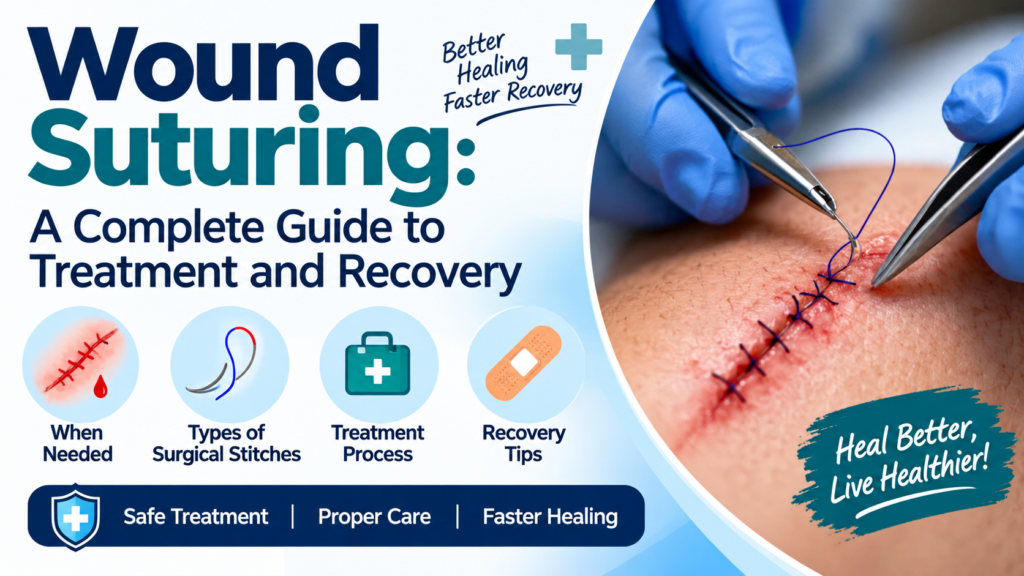
Cuts and injuries are common occurrences that can happen during everyday activities, road accidents, sports, or household work. While minor wounds often heal with basic first aid, deeper injuries may require medical attention to ensure proper closure and recovery. Wound Suturing is a commonly performed medical procedure that helps bring separated skin edges together, control bleeding, and support natural tissue healing. At Star Hospital Udaipur, patients can seek professional medical evaluation for injuries requiring appropriate wound management, along with specialised care related to plastic surgery in Udaipur when clinically necessary. Understanding how stitches work, when they are necessary, and what happens during treatment can help individuals make informed decisions and avoid complications following an injury. Timely assessment is particularly important when a wound is deep, contaminated, or associated with persistent bleeding.
The treatment approach depends on several factors, including the wound’s location, depth, size, and overall condition. Proper cleaning, suitable closure techniques, and careful aftercare contribute to safer healing and may help minimise noticeable scarring. This guide explains the procedure, available stitching methods, recovery expectations, and essential precautions patients should understand.
Read More:Facial Injuries and Fractures: Causes, Symptoms and Care
What Is Wound Suturing and When Is It Needed?
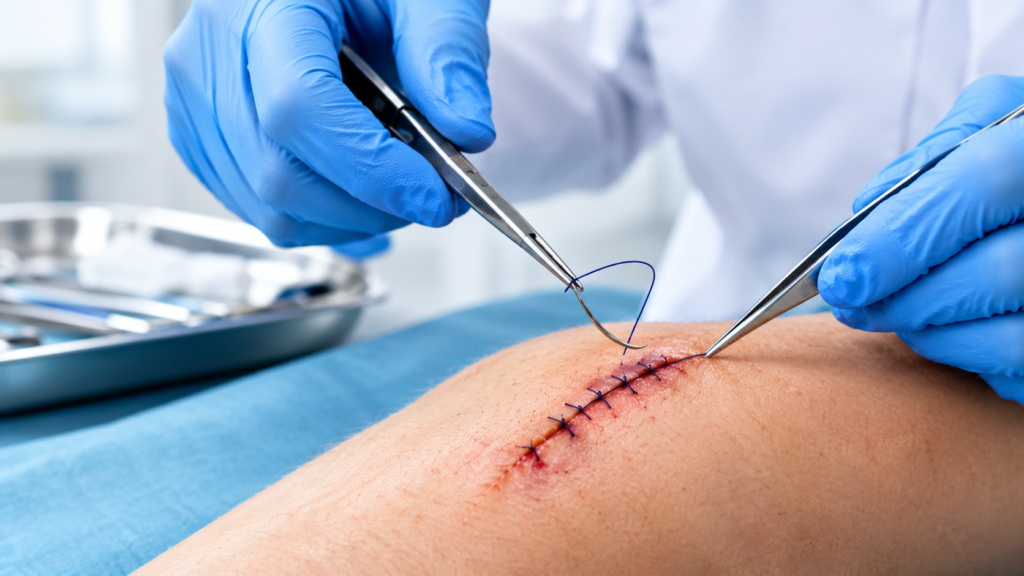
Wound Suturing is a medical technique in which healthcare professionals use specialised needles and threads to close an open wound. It helps hold separated tissues together while the body’s natural healing process takes place.
Not every cut requires stitches. Healthcare professionals examine the injury before deciding whether closure is necessary.
Stitches may be recommended when:
- A wound is deep or has widely separated edges.
- Bleeding continues despite applying direct pressure.
- An injury involves the face, hands, joints, or other sensitive areas.
- The cut exposes deeper tissues beneath the skin.
- Closing the wound may support better healing and functional recovery.
Certain injuries, including animal bites, heavily contaminated cuts, and older wounds, require additional evaluation because immediate closure may increase infection risks.
Seek urgent medical attention for uncontrolled bleeding, loss of sensation, difficulty moving an injured area, or suspected damage to deeper structures.
Types of Surgical Stitches Used for Wound Closure
Healthcare professionals select stitching materials according to the injury’s location, depth, tissue condition, and expected healing requirements.
Understanding the different types of surgical stitches helps patients recognise why particular materials are recommended.
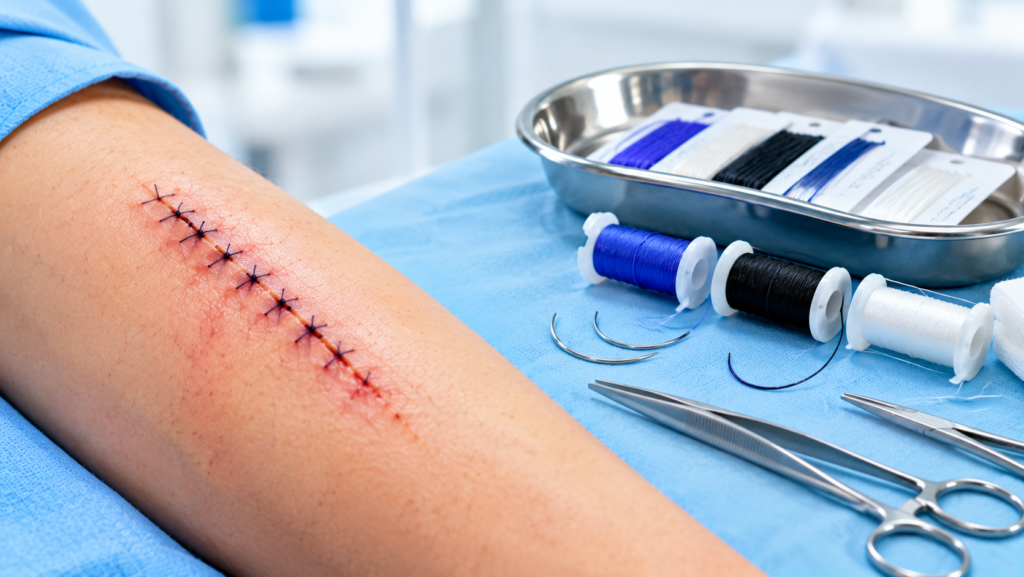
1. Absorbable Stitches
These stitches gradually break down inside the body and generally do not require removal. They are commonly used for deeper tissue layers and certain internal closures.
2. Non-Absorbable Stitches
These stitches remain intact until a healthcare professional removes them. They are frequently used for external skin closure when prolonged support is required.
3. Interrupted Stitches
Individual stitches are placed separately along the wound. This technique allows the healthcare professional to adjust tension across different sections.
4. Continuous Stitches
A single thread is used to create a continuous line of stitches. This method may be suitable for selected wounds requiring efficient closure.
The choice among these types of surgical stitches depends on clinical assessment rather than patient preference alone.
How Is Wound Suturing Performed?
The procedure generally follows a systematic approach designed to support safe wound closure.
Step 1: Wound Examination
A healthcare professional a Plastic surgeon in this case evaluates the injury, checks for bleeding, and assesses possible damage to surrounding tissues, nerves, or blood vessels.
Step 2: Cleaning and Preparation
The wound is carefully cleaned to remove visible dirt and reduce contamination. Additional treatment may be necessary if foreign material is present.
Step 3: Local Anaesthesia
A local anaesthetic is commonly administered to numb the affected area and reduce discomfort during the procedure.
Step 4: Wound Closure
The Plastic surgeon brings the wound edges together using an appropriate fine stitching technique while avoiding excessive tension , using very fine non irritating sutures.
Step 5: Dressing and Instructions
A suitable dressing is applied, and the patient receives instructions regarding wound care, follow-up appointments, and possible stitch removal.
Depending on the injury, tetanus protection or other treatment may also be considered.
Benefits of Proper Wound Closure
Appropriate stitching can offer several benefits when performed on a suitable injury.
- Helps bring separated wound edges together.
- Supports the body’s natural tissue-repair process.
- May reduce visible scarring when combined with proper care.
- Helps protect deeper tissues during early recovery.
- Supports functional healing in areas exposed to movement.
However, Wound Suturing does not guarantee scar-free healing. Final outcomes depend on the injury, infection risk, skin characteristics, and individual recovery.
Understanding Stitches Healing Time
Recovery varies according to the wound’s depth, location, severity, and the patient’s overall health.
The expected stitches healing time also depends on whether absorbable or non-absorbable materials are used.
For non-absorbable skin stitches, typical removal periods may include:
| Body Area | Approximate Removal Period |
| Face | 3–5 days |
| Scalp | 7–10 days |
| Arms and trunk | 7–14 days |
| Legs | 10–14 days |
| Areas over joints | Around 10–14 days |
These are general estimates, not fixed schedules. A healthcare professional determines the appropriate removal date after examining the wound.
Although the skin may appear closed within days, deeper tissues can take considerably longer to regain strength.
Factors such as diabetes, smoking, infection, poor nutrition, and repeated wound movement may affect stitches healing time.
Essential Aftercare Tips for Faster Recovery
Proper aftercare is important following Wound Suturing, as it helps protect the injured area and supports uncomplicated healing.
Patients should follow these precautions:
- Keep the dressing clean and follow the clinician’s instructions regarding when the wound can get wet.
- Avoid scratching, rubbing, or unnecessarily touching the stitched area.
- Change dressings according to medical advice.
- Avoid activities that stretch or place excessive pressure on the wound.
- Take prescribed medicines exactly as directed.
- Attend scheduled follow-up appointments.
- Never attempt to remove stitches at home.
A balanced diet containing adequate protein, vitamins, and minerals can also support normal tissue repair.
Patients should avoid applying home remedies or unprescribed creams directly to the wound.
Warning Signs That Require Medical Attention
Although most appropriately treated wounds heal without major complications, certain symptoms require prompt evaluation.
Contact a healthcare professional if you experience:
- Increasing redness, warmth, or swelling around the injury.
- Pus, unpleasant odour, or unusual discharge.
- Fever or worsening pain.
- Persistent bleeding after treatment.
- Separation of the stitched wound edges.
- New numbness or difficulty moving the affected area.
These symptoms may indicate infection, delayed healing, or another complication.
Early medical assessment can help identify the underlying problem and determine whether additional treatment is required.
Conclusion
Wound Suturing plays an important role in managing suitable cuts and injuries by supporting tissue closure and natural healing. Understanding the treatment process, stitching materials, recovery expectations, and essential aftercare precautions helps patients make informed healthcare decisions.
Timely wound assessment is particularly important for deep injuries, persistent bleeding, or suspected infection. At Star Hospital Udaipur, individuals looking for a plastic surgery hospital in Udaipur can seek professional consultation for appropriate wound assessment, and fine suturing techniques with minimal scarring and treatment guidance, and recovery advice. Following medical instructions and attending recommended follow-up appointments remain essential for achieving a safe and comfortable recovery.
FAQs About Wound Suturing
1. What is wound suturing?
Wound suturing is a medical procedure used to close deep cuts or open wounds with surgical stitches to support proper healing.
2. Is wound suturing painful?
Doctors usually administer local anaesthesia to numb the affected area and minimise discomfort during the procedure.
3. How long do stitches take to heal?
Initial healing generally takes 7–14 days, depending on the wound’s location, depth, and severity.
4. When should stitches be removed?
Non-absorbable stitches are generally removed within 3–14 days, depending on the body area and medical advice.
5. What should I avoid after getting stitches?
Avoid scratching, stretching, soaking, or applying unprescribed products to the wound. Follow your doctor’s aftercare instructions.